
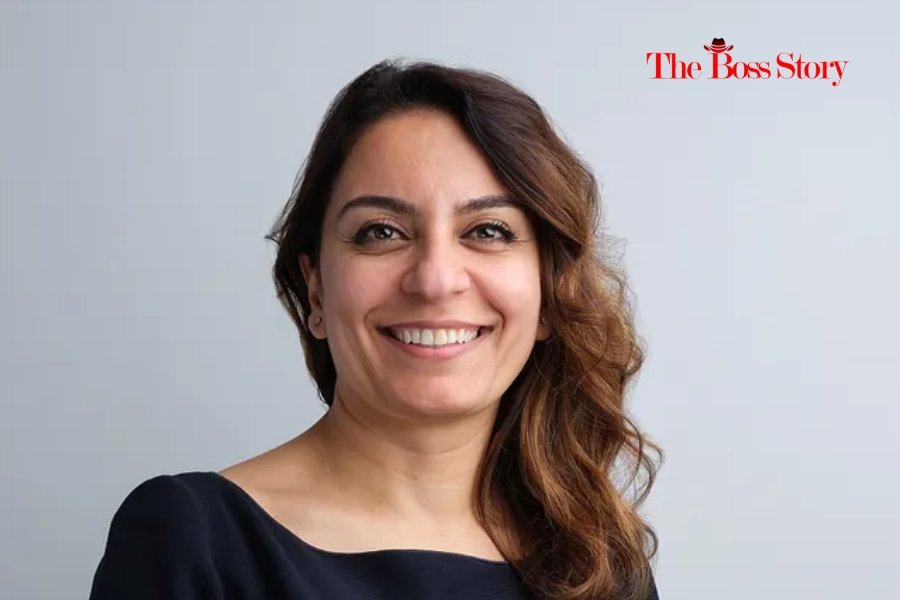
As a part of our series about Mental Health Champions helping to promote mental wellness, I had the pleasure to interview Dr. Mandana Ahmadi, CEO and Co-Founder of Alena.
Mandana has always been passionate about mental health and how to use technology for social good, she has spent her career seeking a deep understanding of the human mind in order to protect and heal it. As Co-Founder and CEO of Alena, Mandana is dedicated to tackling the world’s mental health crisis, starting first with social anxiety. Mandana is passionate about leveraging technology to create meaningful change and believes that Alena can be used as a tool to empower people to take charge of their mental health.
Thank you so much for doing this with us! Before we dig in, our readers would like to get to know you a bit. Can you tell us a bit about how you grew up?
I grew up in Iran in an environment of war and restricted civil liberties which provided me with a unique perspective on life — it made me aware from an early age how fragile existence is, and that we are all dependent on each other to enjoy the time we have on this planet. This led to my interest in brain sciences and eventually computational neuroscience; I wanted to use scientific methods as a way to objectively understand our brains.
You are currently leading an initiative that is helping to promote mental wellness. Can you tell us a bit more specifically about what you are trying to address?
When we launched Alena, prior to the pandemic, it felt like we were putting forth a new concept- that mental wellness is an integral part of not only individual wellbeing but also societal functioning. We wanted people to understand how our psychological health affects all aspects of life from productivity and family relationships, down to children’s development. But then when lockdown happened there was this wake up call for everyone as suddenly their environment had shifted drastically and amplified any issues with regards towards mental health — so much so that now when I talk about its importance most people immediately agree!
At Alena, we are focused on providing precise and effective mental health care to those in need. We want to be able to quickly give our people the specific help they require, without a lot of guesswork or misdiagnosis, which is quite common in mental illnesses due to there being no objective way of measuring what is actually wrong.
We have revolutionised the therapeutic process by providing precision psychiatry that combines cutting-edge science with clinical treatments. We understand how difficult it is for both therapists and patients when attempting diagnostics; which is why our innovative approach puts us at the forefront of bridging those gaps in order to optimally access any unspoken issues from a patient.
Most people were sceptical of how we could make Alena accessible and affordable as mental health support today heavily relies on a human element. Having a human involved is essential in connecting a patient with the right treatment plan. No machine or algorithm, as of yet, has been able to address this problem and bottleneck. Unfortunately, this bottleneck means that the majority of people don’t get the help they need as they’re often not assigned the right treatment from the start, which is why the world still has a major mental health crisis despite all the digital therapeutics available.
Alena addresses this issue with computational psychiatry, which enables us to automate the entire care pathway. From the moment someone starts using Alena, within an hour we are able to give them the exact treatment that is right for them just by objectively measuring the health of their cognitive processes.
Can you tell us the backstory about what inspired you to originally feel passionate about this cause?
I am an empathic person. Anytime I see someone hurting, it pains me as well; and seeing them free from suffering brings light into my life. When I became a mother myself, this concept amplified in magnitude, as I could see very closely when parents do not receive proper mental health support for themselves (for issues such as depression or anxiety), their children will likely suffer as a consequence, often for life. This is an example of how mental health’s impact crosses generational boundaries at scale.
My research was eye-opening — I realised how much we’ve been able to uncover, yet it takes decades before everyone can really benefit from the findings. That is what inspired me to start Alena — to close the gap between getting cutting-edge science into people’s hands as soon as possible.
Many of us have ideas, dreams, and passions, but never manifest them. They don’t get up and just do it. But you did. Was there an “Aha Moment” that made you decide that you were actually going to step up and do it? What was that final trigger?
Alena has been a constant progression towards my quest on finding what is a scalable, effective and meaningful way to alleviate suffering on a global scale. Despite trying many ways of approaching this, science has always been my strength. Neuroscience was my path of choice, as studying the brain was how I could understand suffering.
For me, Alena is about striving for true accessibility in what state of the art mental health has to offer. With our technology, we can reach somebody living in the most remote corner of the world — giving them access to science and technology that someone frequenting Fifth Avenue has. This became my mission from day one: to redefine how we view mental health and empower people with access to this combined tool they could benefit from.
I wanted to start Alena with the intention of revolutionising our collective approach to mental health by offering a unique combination of technology and science. Through this education, we can all gain insight into why we behave in certain ways while simultaneously learning how to be more compassionate towards ourselves and others. Ultimately it is not Alena that will solve this crisis — but rather people being educated on how we each have something unique that contributes towards creating positive change between ourselves and others, and have the right tools, such as Alena, to navigate it
Can you share the most interesting story that happened to you since you began leading your company or organization?
When we launched Alena, it was incredible to witness the positive response from people seeking a safe space and understanding of their mental health. It surprised me to see so many people wanting to share with me that they had been suffering silently with their mental health. This large-scale silent suffering is worrying yet shines a light on the need to improve our understanding in this area.
Receiving messages from Alena users has been a really special experience for me. It’s humbling to see the tangible impact our product is having on people’s lives, and it motivates us to continue creating meaningful experiences with each of them through every interaction we have. I’m proud that despite being an app-based platform, those using Alena can still feel connected in some way — not only do they recognize what’s available at their fingertips but also understand there are actual humans behind this journey too!
None of us can be successful without some help along the way. Did you have mentors or cheerleaders who helped you to succeed? Can you tell us a story about their influence?
My mom has been a huge influence on my life, teaching me about resilience and the power of never giving up. Even through all of the tough circumstances our family faced growing up — living on an Air Force base with raids, revolution and embargoes — she showed me how to maintain compassion in spite of anything that comes your way. Resilience is often misinterpreted as being hard-nosed or aggressive but my mom helped set a different example for me; one which emphasised empathy along with strength during times of adversity.
Professor John Hertz of NORDITA was a defining figure in my life, as he opened up the fascinating world of computational neuroscience to me. He showed me how mathematics can be used to get an objective understanding of the brain’s behaviour and biology instead of relying on philosophical opinions. This inspired me immensely and helped pave my way into this field.
I’m incredibly lucky to have my husband by my side through all the long hours and dedication that comes with running Alena. He’s always been a pillar of emotional support, keeping me feeling positive even when things get tough — reminding me why it is we’re doing what we do here at Alena.
I’m deeply thankful to everyone who has helped make Alena a reality, especially the people that believed in it from the start. It’s remarkable how many of my team members and our investors chose this project over countless others. My co-founder also deserves special credit for being so supportive throughout every step of this journey.
According to Mental Health America’s report, over 44 million Americans have a mental health condition. Yet there’s still a stigma about mental illness. Can you share a few reasons you think this is so?
Mental health has often been overlooked and misunderstood, leading to stigma. My parents’ generation had such limited knowledge about it and the negative media portrayal created an environment where people were afraid to talk openly about their struggles out of fear that they’d be labelled as “dysfunctional”.
Thankfully with the advancement of science we’re now seeing more people speak up about their own mental wellness. We’re also realising that early support could prevent so many from struggling later on in life. It’s amazing how understanding our mental health can make such an impact!
It feels like there has been a seismic shift in recent years towards more compassion and understanding. The pandemic certainly gave us all pause — life is indeed fragile, yet by leaning into this new way of thinking I believe people are finding comfort in asking for support when needed without fear or judgement.
In your experience, what should a) individuals b) society, and c) the government do to better support people suffering from mental illness?
It is a very big question, and a lot still needs to happen. When I speak to people who are overcoming these challenges, their wants are; understanding, time, support and compassion. These are the things that are not expensive to give. We should provide these things by starting with the closest people to us, regardless of whether they have mental health challenges or not.
In terms of government, they need to do more in terms of raising the general public awareness and start educating early — mental health struggles start very, very early on, so start educating at school level, when academic education begins. In London, local governments and groups are pretty good at creating communities to help those who need support stay on the right track, but other places are behind in many ways.
What strategies do you use to promote your own wellbeing and mental wellness?
For me, prioritising downtime with my family is very important. The biggest, most rewarding compliment I have ever heard in my life is, “Mommy, I love you.” That means the world to me. That for me is the reason I do what I do. Mental wellness is about human connections; it’s about us seeing the good in each other and enjoying that. And of course, for me, it begins with family.
I’m also trying to optimise things that bring me joy. For example baking and hiking — both I enjoy with my kids and my husband. I am a fierce advocate for routines, for both myself and others. Routines open up space for our brain to either relax or enjoy. They also mean less stress and help me get things done, which is very good for my mental health.
What are your favorite books, podcasts or resources that inspire you to be a mental health champion?
I wish I could say I have a favourite, but my biggest champions are the people around me. I love observing people, understanding them and looking beyond how they are on the surface and trying to imagine, how is life for them? How are they feeling? What are they struggling with? What are they happy about? What path have they walked to become the special person they are today? Everybody is special in some ways, if we are keen to see it.
These nuggets of wisdom that come from people who have lived life is a very niche, very specialised understanding and insight into something that is valuable to me.
If you could tell other people one thing about why they should consider making a positive impact on our environment or society, like you, what would you tell them?
I would advise them to not focus on the final destination of the challenge they’re trying to tackle, but instead take small steps as change is incremental. Ask yourself, what is the smallest step you can take for creating the world you envision? For me, the first small step was to make myself a promise that when I see someone looking down — no matter who, such as a stranger, driver in the random car next to me, a cashier at Sainsbury’s — I will make them smile. If I can make that person smile, I have brought a little bit of hope or joy into their life, no matter how briefly.
Alena is a big endeavour that uses computational psychiatry and strives to change the world’s regulations. But at the core of it, it’s about creating positive human interactions, and making someone smile genuinely and bringing sunshine to someone’s life is a part of that dream. If you see the need for a change and you have an idea, sit down and be honest with yourself and ask, what is my reason for doing this? What would the world look like if I made this change? How is this going to impact people around me? What would this mean for individuals? One day, after taking lots of little steps, you will look back and see how much you have achieved.
How can our readers follow you online?
The best way to reach out to me directly is on LinkedIn. I am working on creating the Alena Twitter account, but you can always reach out via Alena.com too. If you send an email via our contact page, I will see it and I’m always happy to have a chat with people!
Company Website : alena.com
For more read Health stories, Click here